
Business travel can quickly disrupt routine. With only 2 in 10 business travellers managing to exercise regularly when traveling, red-eye flights, late dinners, long days of meetings, and limited space often push exercise to the bottom of the to-do list.
“Staying active while travelling is essential to manage stress, sleep, cognitive functioning and to keep your routine away from home. And it does not require a full gym session or specialist equipment,” says Eugine Shai, Sales Executive at ANEW Hotels and Resorts, who travels frequently for work and is passionate about his fitness.
For Global Wellness Day on 13 June, Eugine shares practical ways for travellers to stay active in a compact city hotel room or on large resort grounds.
In your hotel room or no gym?
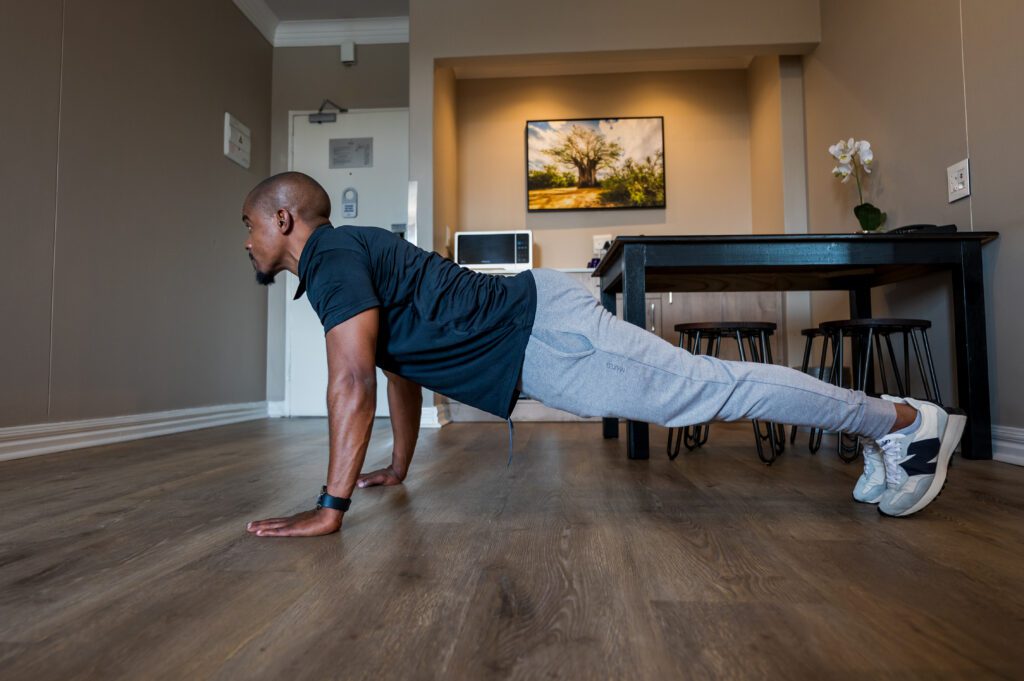
No gym, no problem. A standard hotel room offers enough space for short, effective movement breaks.
Mobility flow
A 10-minute sequence to release stiffness after travelling or a day filled with long meetings:
- Slow, dynamic stretches to prepare the body for exercise
- Standing hip circles beside the desk
- Star jumps
- Running on the spot to get the blood flowing
- Controlled squats
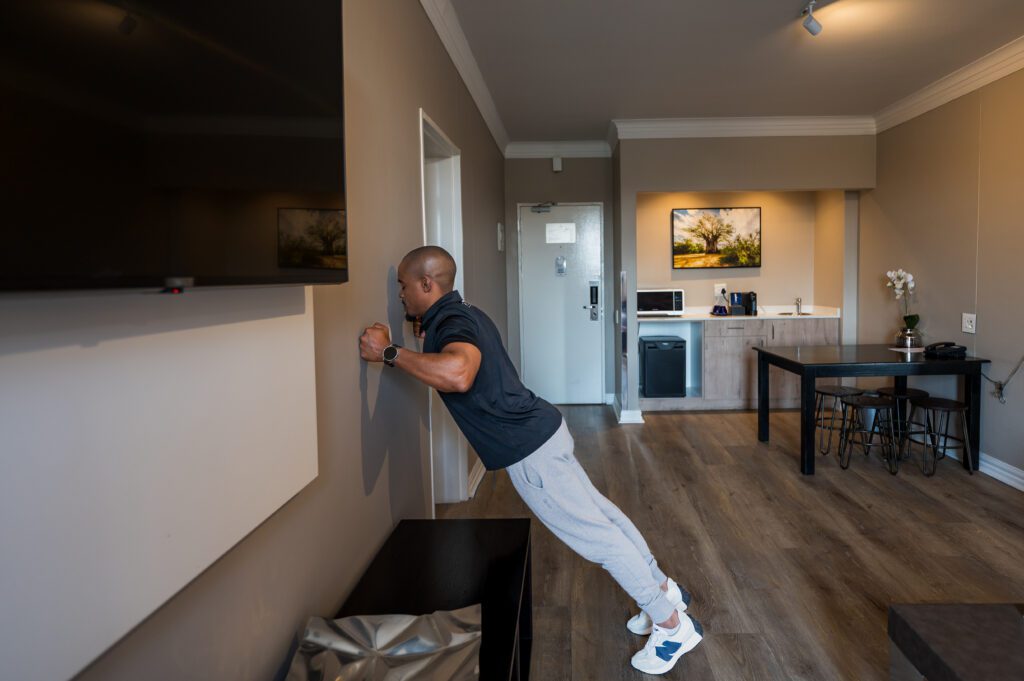
- Diagonal wall push ups to engage upper chest, triceps and core. This is a three in one exercise, so aim for higher repetitions while focusing on balance and proper form to avoid injury
- Seated spinal twists on the edge of a chair
Eugene’s top tip:
For muscle growth, complete these exercises after dinner, followed by a warm shower and rest. For weight management, perform them before breakfast. Aim for two to six sets of 10-15 repetitions per exercise, moving slowly and resting thirty seconds between sets. Prioritise intensity and proper form over speed, and stop when your body signals fatigue.
Resistance training
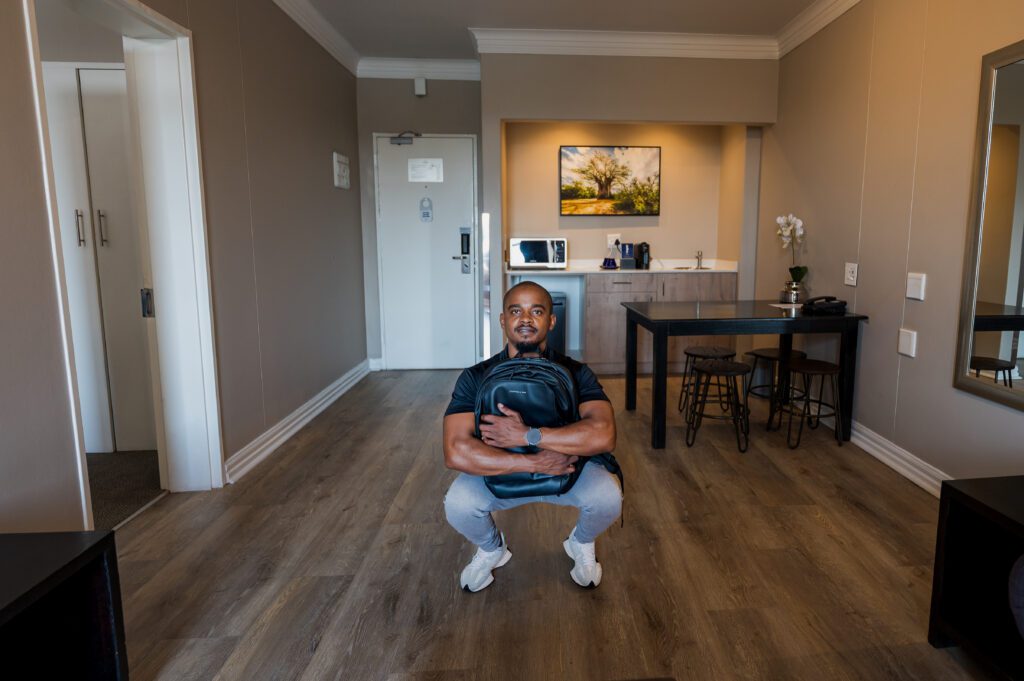
A small, packed suitcase can double as effective resistance equipment:
- Overhead presses using a smaller bag to target triceps and shoulders
- Bent over rows to target the back
- Squats while holding luggage to engage glutes and legs
- A laptop bag can be added as resistance during lunges
- Additionally, with shoulder exercises, like shoulder raises, can easily be completed with two water bottles (replacing your usual dumbbells)
Complete four to six sets of 10–15 repetitions, keeping movements controlled and intensity steady. Adjust volume according to your fitness level and recovery time.
Eugene’s top tip:
If luggage feels too light, add hotel cushions to your bag for extra resistance.
- Walking In and around a large resort property
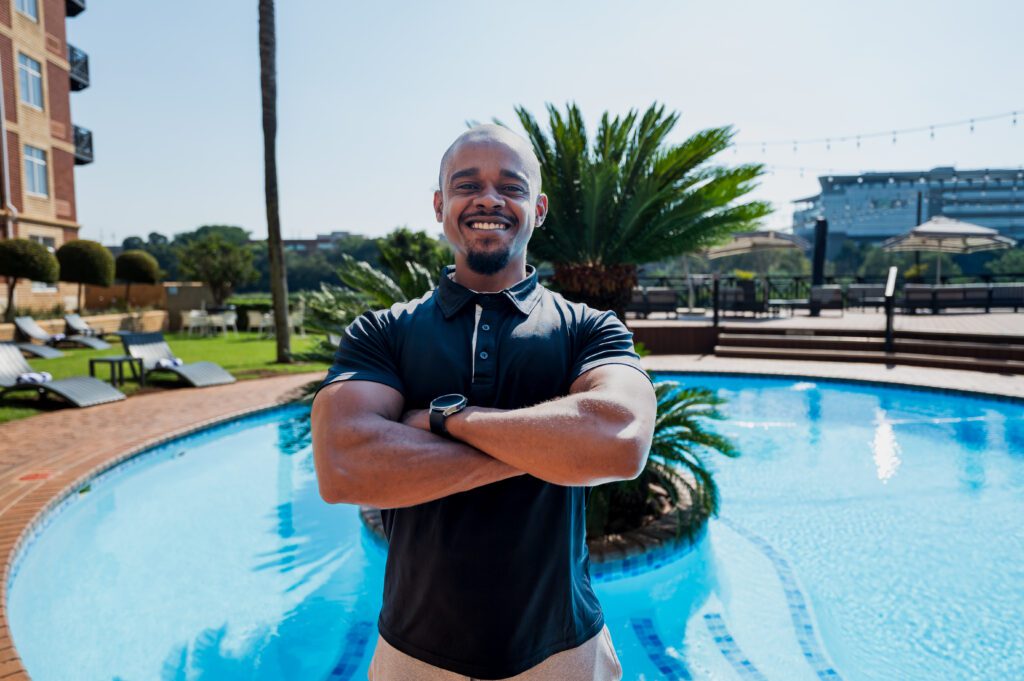
Larger properties offer generous space that can double as a workout area.
Instead of a steady stroll, try interval walking:
- Two minutes of brisk walking
- One minute at a faster pace
Repeat for 15-20 minutes while exploring pathways, gardens or perimeter roads, elevating your heart rate without the need of a treadmill.
In and around a small business hotel
Urban properties still offer opportunities that simply require a shift in mindset. A purposeful 15–20-minute walk around the block, promenade or nearby precinct before dinner can act as a “reset walk”:
- Maintain upright posture
- Walk with intention rather than speed
- Focus on breathing rhythm

3. Low-impact indoor movement options
For early mornings or late evenings, when outdoor activity is limited, quiet indoor exercises can help maintain momentum:
- Walking lunges, performed slowly and mindfully
- Heel-to-toe balance walks
- Controlled marching knee lifts
Complete two to six sets of 10–12 repetitions per exercise. Focus on light steps and controlled breathing to avoid disturbing other guests.
4. How to use the hotel gym effectively
Small hotel gyms still provide everything needed for a strong, effective full body workout.
Time based circuits
Instead of counting repetitions aim for:
- Two minutes of work
- 60-90 seconds recovery
Rotate between treadmill walking, light dumbbells, resistance bands and bodyweight exercises. Focus on time rather than repetitions to increase intensity and muscle engagement.
Eugene’s top tip:
These sessions work best after dinner at the end of the day, once the body is fully warmed up. Hydration is essential, and it is important to stop once fatigue sets in.
Single dumbbell training
Using one weight at a time improves control and balance:
- Dumbbell chest presses on a bench
- Shoulder presses at a 90° angle
- Hanner curls for biceps and forearms, including side variations for added activation
This approach keeps workouts interesting without multiple machines. Complete two to six sets of 10-15 repetitions per exercise depending on fitness level, resting 30-40 seconds between sets.
As seen in: GQ


